
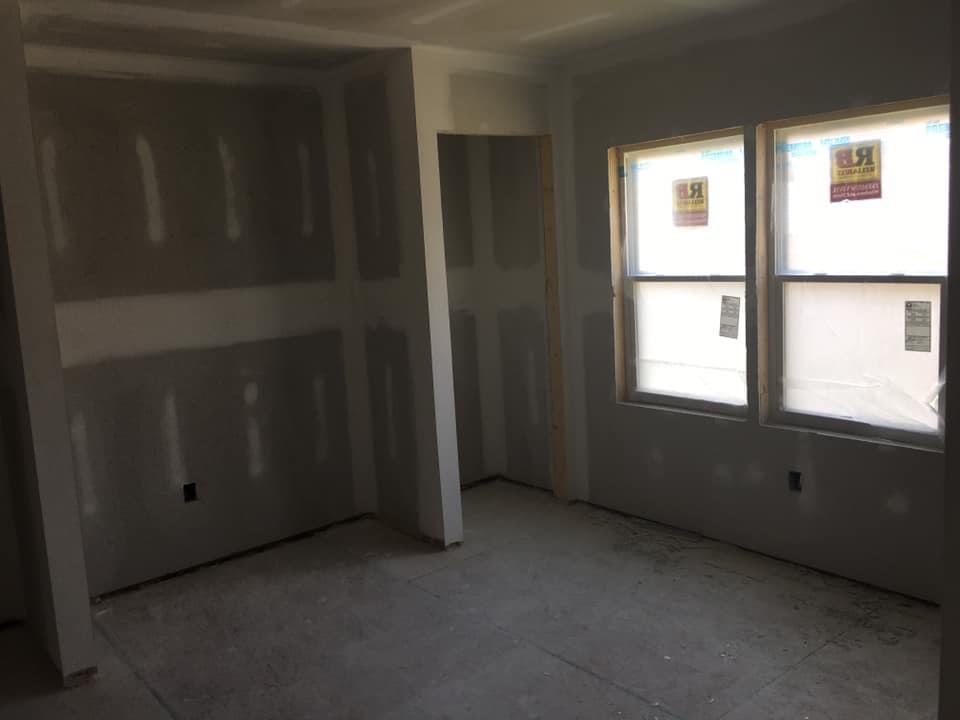
Not every damaged wall needs to be replaced. Many holes, dents, popped fasteners, and settling cracks can be repaired cleanly. The key is understanding whether the damage is only at the surface or points to a larger problem behind it.
Good candidates for a focused patch
Small impact holes, hardware damage, localized dents, minor seam issues, and isolated cracks are often repairable. A professional repair removes loose material, creates a stable backing where needed, applies the appropriate compound and tape, then sands and prepares the surface for paint.
When replacement makes more sense
- The drywall is soft, swollen, crumbling, or extensively stained.
- Damage spans multiple studs or a large ceiling area.
- Repeated cracking suggests movement or an unresolved underlying issue.
- Mold, persistent moisture, or a plumbing leak may be present.
- The wall must be opened to complete electrical, plumbing, or insulation work.
Fix the source before the surface
Water-damaged drywall should not be closed up until the moisture source is identified and corrected. The same principle applies to repeated cracks or nail pops: repairing the visible symptom without addressing movement, fastening, or framing can lead to the same blemish returning.
Texture and paint affect the final result
A patch is only successful when it blends with the surrounding wall. Matching texture, controlling the repair edge, using primer, and painting a logical break or complete wall can make the difference between a repair that disappears and one that remains obvious in changing light.
Get the right scope before work begins
LETUS evaluates the condition, recommends a practical repair area, and can coordinate drywall finishing with related trim, paint, or turnover work. That keeps a focused repair from becoming a needlessly large renovation while still delivering a durable finish.